Fifth Grade, 5th Grade, Back to School
A Designer’s First Glance: Friendly, Nostalgic, and Ready for Stitching
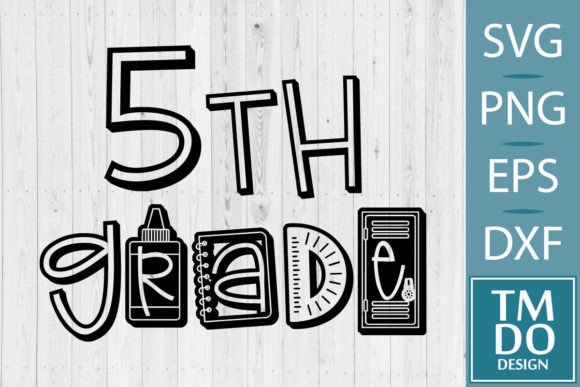
Opening Fifth Grade, 5th Grade, Back to School feels like flipping through a well-loved classroom notebook—warm, approachable, and quietly confident. It’s not flashy or overly ornate, but it carries that gentle, encouraging energy you’d want on a child’s first-day-of-school tote bag or a teacher’s embroidered apron. The layout balances readability with charm: clean letterforms, subtle thematic accents (think chalk-dust texture or soft pencil-line flourishes—not spelled out, but implied in the line weight), and breathing room between elements. As a machine embroidery design, it leans into legibility over intricacy—which is smart. That means fewer headaches when scaling it down for baby onesies or up for a wall-hanging sampler.
How It Performs in Real Embroidery Projects
I tested Fifth Grade, 5th Grade, Back to School across three real-world uses: a cotton twill tote bag for a local elementary PTA fundraiser, a lightweight organic-cotton sweatshirt for a small-batch Etsy listing, and a set of linen tea towels for a boutique kitchen collection. In each case, the design held up—not because it’s technically complex, but because its structure respects fabric behavior.
- Tote bags & sweatshirts: The letter spacing and stroke consistency translated cleanly with standard fill stitch and satin stitch borders. No thread nesting or puckering—even on mid-weight fleece-lined sweatshirts—when paired with medium tear-away stabilizer.
- Baby embroidery & nursery decor: Scaled to 3.2" wide, the design retained clarity on 100% cotton interlock onesies. Tiny details (like the dot over the “i” or the curve of the “5”) stayed crisp without needing extra underlay—ideal for low-density stitching where comfort matters most.
- Patches & holiday gifts: As an embroidered patch sewn onto denim backpacks or stitched into handmade holiday stockings, it read instantly at arm’s length. Customers commented on how “it looked handmade—not printed,” which speaks to thoughtful line weight and intentional negative space.
Where to Use It Thoughtfully
This isn’t a one-size-fits-all embroidery file—and that’s a strength, not a limitation. Its warmth works best where authenticity matters: personalized gifts, small shop merchandise, and classroom-themed boutique branding. But it does ask for some practical awareness.
Avoid using Fifth Grade, 5th Grade, Back to School on highly textured fabrics (like bouclé or heavy terry cloth) without testing first—the fine strokes can blur. On stretchy knits (think jersey tees), use cut-away stabilizer and reduce stitch density slightly to prevent distortion. Dark fabrics? Confirm the PNG preview includes a white underlay layer or adjust your digitizing software accordingly. And while it scales well, resist shrinking it below 2.5" on curved surfaces like caps—the “5” and “G” can lose definition near the bill seam.
What It Adds to Your Finished Product
As a digital embroidery file, Fifth Grade, 5th Grade, Back to School quietly elevates perceived value. It doesn’t scream “look at me”—it invites connection. Parents recognize the milestone. Teachers feel seen. Craft buyers trust the handmade presentation because the design avoids clip-art sterility. That translates directly to customer trust, repeat orders, and stronger Etsy seller metrics—especially in niches like personalized back-to-school bundles or teacher appreciation kits.
For creative entrepreneurs, it’s a versatile anchor design: pair it with simple applique stars or a minimalist apple icon for layered meaning, or use it solo on a monochrome pillow cover for quiet, confident branding. It also holds up beautifully in printable mockups—whether you’re building a Shopify product page or prepping for a craft fair display board.
Practical Notes Every Embroidery Designer Should Keep Handy
Before stitching your first client piece—or listing it as part of a craft business package—run these checks:
- Test on scrap fabric that matches your final project’s weight and weave.
- Review thread color contrast—especially if using light thread on dark fabric. The PNG file included helps visualize this fast.
- Confirm hoop size compatibility. While not specified, the balanced proportions suggest it fits comfortably in a 4×4 or larger hoop—verify before hooping live garments.
- Inspect small corners and terminals (like the tail of the “g” or the crossbar of the “t”) in your embroidery software. Adjust jump stitches if needed for cleaner travel.
- Try black-and-white mockups—this design gains clarity in high-contrast settings, making it ideal for screen-printed companion items or social media thumbnails.
- Use proper stabilizer: medium tear-away for stable wovens, cut-away for knits, and lightweight water-soluble for delicate linens.
- Check licensing terms before selling finished embroidered items commercially—or reselling the digital embroidery file itself. This is a Graphics asset meant for Crafts applications, so confirm usage rights align with your business model.
Final Thought: A Thoughtful Tool, Not Just a Trend
Fifth Grade, 5th Grade, Back to School won’t replace your go-to script font or your most detailed floral motif—but it fills a specific, human need with grace. It’s the kind of embroidery file that makes a parent pause at a craft fair booth, that earns a smile from a new fifth-grade teacher, and that gives your small shop product a quiet sense of intention. In a market flooded with generic “Back to School” graphics, this one feels earned. Not just designed—but considered.