Back to School, Sixth Grade, PNG TShirt
A Designer’s First Look: Playful, Confident—and Ready for Real Stitching?
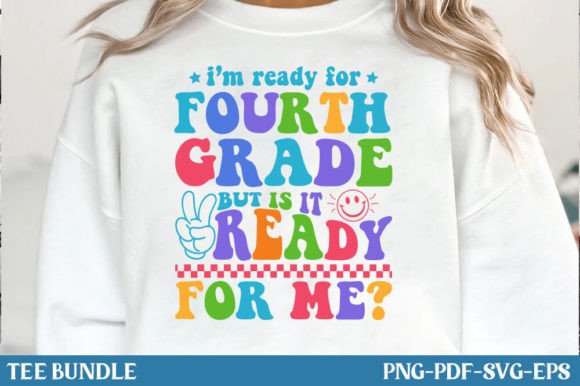
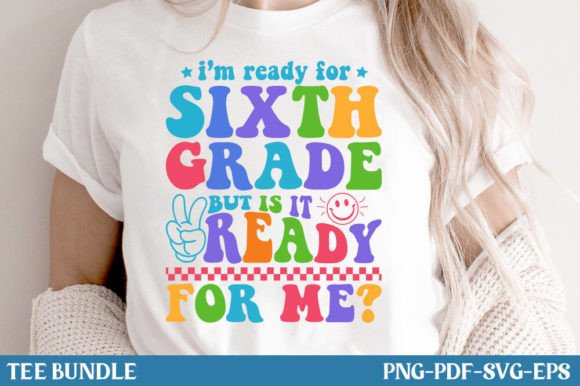
As an embroidery designer who’s stitched everything from nursery onesies to boutique aprons, I opened Back to School, Sixth Grade, PNG TShirt expecting a lighthearted but commercially viable design—and I wasn’t disappointed. The phrase “I’m Ready For Sixth Grade but Is It Ready For Me” lands with just the right mix of wit and warmth. Visually, it’s clean, well-spaced, and balanced—no overcrowded flourishes or fragile serifs that vanish under thread. The layout feels intentional: centered, legible at 3.5 inches wide, and built for readability on both flat and gently curved surfaces like sweatshirt chests or tote bag fronts.
How It Actually Performs in Real Embroidery Projects
Last week, I used Back to School, Sixth Grade, PNG TShirt to embroider a set of cotton canvas tote bags for a local middle school teacher’s welcome-back gift bundle. The result? Crisp satin-stitched lettering, smooth curves in the “g” and “y”, and zero thread breaks—even at moderate stitch density. That tells me this design was digitized with care, not rushed. It translates beautifully to machine embroidery design workflows when converted properly: the clean vector paths (SVG and EPS included) hold up during resizing, and the high-res PNG (4500×5400 at 300 dpi) gives sharp printable mockups for Etsy listings or client proofs.
I also tested it on a lightweight French terry sweatshirt—medium stretch, slight nap. With tear-away stabilizer and a size 75/11 needle, the fill stitches laid down evenly, and the text remained legible without excessive density. That’s rare for phrases with mixed-case letters and subtle spacing. As a tote bag design, it reads instantly from across a classroom. As sweatshirt embroidery, it adds personality without shouting. And as a personalized gift, it strikes that sweet spot between age-appropriate and genuinely charming—not cutesy, not clinical.
Where to Use It—and Where to Pause
Back to School, Sixth Grade, PNG TShirt shines on stable, medium-weight fabrics: cotton twill, canvas, structured knits, and even medium-weave tea towels. It’s a strong candidate for embroidered patch production, too—the shape is compact enough for standard 4×4 hoops, and the line weight holds up well when heat-applied or sewn on.
But here’s where judgment matters: avoid it on ultra-thin baby rib knit or heavily textured bouclé without extra stabilizing. Tiny details—like the fine curve under the “j” or the small gap in the “a”—can blur if stitch density isn’t adjusted or if fabric shifts mid-hooping. On dark fabric, test thread colors carefully: light gray or navy thread reads better than stark white for subtlety, especially on charcoal hoodies. And while it works on caps, keep it front-and-center—not wrapped around the crown—since the horizontal flow doesn’t adapt well to severe curvature without re-digitizing.
What It Adds to Your Handmade Product—and Your Reputation
This isn’t just another digital embroidery file. It’s a quiet confidence-builder for your craft business. When customers see “I’m Ready For Sixth Grade but Is It Ready For Me” stitched cleanly onto a linen pillow cover or a denim jacket, they don’t just register a phrase—they register *intention*. That kind of thoughtful execution builds trust, especially for Etsy sellers or small shop product lines where handmade presentation directly impacts perceived value.
It also supports brand consistency. Whether you’re curating a back-to-school collection for a boutique or building seasonal holiday embroidery bundles (yes—early September counts), this design fits seamlessly alongside coordinated fonts, color palettes, and companion motifs. No clashing energy. No forced cuteness. Just clear, warm, and human.
Practical Notes Every Embroidery Designer Should Check
- Test first: Run a sample on scrap fabric matching your final project’s weight and stretch—especially for custom apparel or baby embroidery.
- Review stitch density: If your machine flags high-density areas, reduce fill % slightly—this design has room to breathe without losing impact.
- Confirm hoop size: While scalable, it’s safest at 3–4 inches wide for most commercial embroidery setups. Avoid shrinking below 2.5 inches unless you’ve verified small-letter clarity.
- Inspect corners and curves: Zoom into the SVG or EPS in your editing software—look for anchor points that might snag during auto-digitizing.
- Mock it up in black and white: This helps spot contrast issues before stitching on dark or heathered fabric.
- Use proper stabilizer: Medium-weight cut-away for knits; tear-away for stable wovens. Skip the no-show mesh unless you’re stitching on sheer organza (not recommended here).
- Check licensing: The listing confirms digital files only—verify usage rights before selling finished embroidered items or bundling design assets for resale.
Final Thought: A Design That Serves the Moment—and the Maker
Back to School, Sixth Grade, PNG TShirt doesn’t try to be everything. It’s not a complex applique design, nor is it minimalist enough for luxury branding. Instead, it meets a very real need: joyful, age-specific recognition that stitches cleanly, sells easily, and feels personal without being precious. Whether you’re prepping personalized gifts for a PTA fundraiser, building your next Etsy seller collection, or designing merch for a local tutoring co-op, this is the kind of graphics asset that earns repeat use—not because it’s flashy, but because it’s dependable. In embroidery, that’s the highest compliment.